Sunday, April 7, 2019

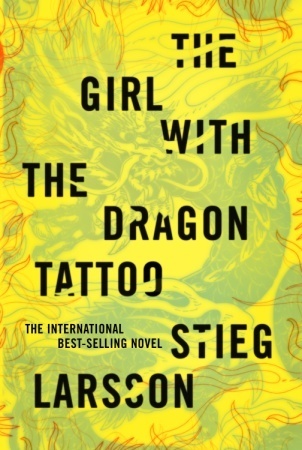
The Girl with the Dragon Tattoo


The Girl with the Dragon Tattoo – by Stieg Larsson

This book was an incredibly satisfying read and a very quick page turner, yet at the same time, I’m not sure if I could recommend it to just anybody. This book is awfully sleazy and queasy with much of its subject matter, and if books were given ratings, this book would definitely receive an NC-17. Such characteristics didn’t necessarily take away from my enjoyment of the book, but I can’t help to wonder if this book could have been toned down a bit where such things are considered and yet have the overall story not suffer.  I didn’t feel that this book needed quite the sensationalism that it demonstrated at times. The author does a great job of never boring his readers, even when we’re reading about boring situations.

Our protagonist is Mikael Blomkvist. Mikael is a middle-aged journalist who breaks a big story of a corrupt big-shot. Problem is the big-shot is pretty big and can afford to not only convince a jury of his innocence but has enough pull to borderline bankrupt Blomkvist and actually get him sent to prison for 3 months. Fortunately, Blomkvist’s efforts catch the attention of retired business mogul Henrik Vanger, and Vanger, who has gobs of money, hires Blomkvist to help solve a crime that happened over 40 years ago.

The “Girl with the Dragon Tattoo” is Lisbeth Sandler and she eventually teams up with Blomkvist. She probably gets less than 1/3 of the page space as the Blomkvist character, but she’s definitely the center of this story that the plot revolves.  Sandler is a 25-year-old reject of society. Less than 5 feet tall and under 100 pounds with a body covered with piercings and tattoos, Sandler is an incredibly smart talent and she mostly works freelance as an investigator.  Not only is she smart as a whip, but her brutal past and troubled upbringing have caused her to become less of a human and more of a genetic thing.  Men are strangely attracted and fascinated by her, yet she keeps everyone at a remote distance emotionally.  This young woman has just been through too much.

It’s Sandler’s scarred upbringing that makes her an excellent companion to Blomkvist as he begins his caper. Not only is she thorough and meticulous, but the creepy family that she and Blomkvist investigate display shadows of what she has dealt with during her torturous past.  This is where the ‘creepiness’ factor comes into play in this book; at least as far as I’m concerned. Sandler has been sexually mistreated her whole life, and the reader is even forced to endure some of her episodes within this story. Although she’s an adult, her upbringing forces her to be in the care of a ‘guardian’, and the guardian knows that this young woman is completely under his control. So we get some unpleasant episodes of poor Lizbeth being raped.  Fortunately, she ends up getting sexual ‘revenge’ on her rapist-guardian, but that’s a bit of chore to read through as well.  I should point out that this happens fairly early in the story and these episodes are designed to shape Sandler’s character before she begins working with Blomkvist during the “real” story in this book.

Once you take the uncomfortableness of rape and molestation out of the framework, there’s still an awful lot of consensual sex going on here.  One reviewer called this book “sexy”.  I would argue that this book is definitely not “sexy” but rather “sex filled”.  These characters have sex all over the place in such a casual fashion, that they seem to view these episodes as nothing much different then talking about the weather forecast with a complete stranger.  Maybe I’m a bit of a prude, but I’m convinced that such behaviors never do anyone good over time.

Perhaps this behavior is normal in Sweden. I should point out that this book takes place in Sweden and was written by a Swedish author. This is the first time I’ve ever read a “Swedish” book and there were some cultural challenges while reading, although I felt that those same challenges were a bit educational. Some things I learned: Swedish names are awfully long and hard to pronounce, it gets very cold there during the Winter, and people in Sweden drink an awful lot of coffee.  I also consulted Google several times to find out things like what Walpurgis Night is, and what is exactly is the value of a kronor. 

Once you get past all of the sex (consensual and non-consensual), this book really does succeed on multiple levels. Even after the ‘mystery’ is solved, the author keeps going. He not only ties up the loose ends, but he further develops his characters; especially Lisbeth Sandler.  She’s incredibly complex, yet because of her situation, we’re always rooting for her.  At the conclusion of the book, it’s easy to see that she just might turn up in another book, and we hope that this is the case (she does, but sadly the author died before any of his works were published, so maybe Sandler’s life never gets unwound as much as one would like).

This was a wonderful book, and despite the issues that I mentioned, found it very easy to keep turning the pages.

The Quiet Man - The Indispensable Presidency of George H.W. Bush


The Quiet Man – The Indispensable Presidency of George H.W. Bush – by John Sununu


“The Quiet Man…”, John Sununu’s first ever book, is very well written but it really wasn’t the book that I was expecting nor the book that I was hoping it would be. Had Sununu made a minor change, such as putting himself on the front cover instead of his boss, my expectations might have been a bit different and, therefore, may have enjoyed it a tad better.


This book is about the 41st president, but I came away feeling like it was too much Sununu and not enough Bush. It’s not that Sununu blabs ad nauseum about himself, his history, and his background, it’s just that I never felt like I was in the same room with George H.W. Bush. I didn’t feel like I ever understood what made 41 tick, and never felt truly like I was inside his head. Instead, I felt like I was being told a story about a casual acquaintance of the author whose main job was not to show us the bad as well as good, but rather paint a hagiography.  


Consider the title: It includes the word “Indispensable”. I’m not sure I would use this word to describe the presidency of George H.W. Bush.  That’s not meant to badmouth the man in any way. He did some great things, some good things, and some bad things.  Sununu tends to elaborate too highly on the good stuff and blame everyone else for the bad stuff. We read about the broken “Read My Lips” promise, and the author really does tell a great first-hand account of how Bush did everything he could to keep his pledge, but it turns out to be too insurmountable of a challenge. So Sununu tends to only mildly slap Bush on the wrist and blame the bulk of the conundrum on the congress. The same thing can be said about Bush’s disastrous reelection campaign of 1992. Sununu blames Bush’s reelection committee for causing his boss to stumble so badly.  In retrospect, this sentiment is partially true (Lee Atwater, the genius behind 1988 had succumbed to a brain tumor and lost his life in 1991), yet when one is Commander-in-Chief, one must shoulder the bulk of the blame.  Bush himself was o.k. with this, but Sununu tries too hard to be an unflinching apologist.


Still, though Sununu does a great job describing some of the key events. I particularly enjoyed the chapters on the collapse of the Cold War and Glasnost, as well as the detailed account of the events leading up to Desert Storm.  Other chapters that focus on Panama and the above mentioned 1992 debacle seem as though Sununu cut them too short, and I really wanted more.  For all the idol-worship, Sununu does know how to keep the history interesting.


Another minor gripe I have is that Bush’s presidency is not detailed sequentially in this book, yet the chapters are laid out by ‘topic’. I recently encountered this in a similar retrospective – Stuart Eizenstat’s book on Jimmy Carter – and came away the exact same feeling. It’s my opinion that books that detail an administration are best told in the order they happened, since the events overlap with each other, and we’re allowed a better picture of the overall perceptions by all in and out of the administration.


Still, for a freshman effort, I would recommend this book as it does give an insider’s view of the administration.  It’s quite tilted in its subject matter’s favor, but Sununu was a very loyal soldier and served his term in office quite well.


If you really are looking for a much more detailed and balanced portrait of George H.W. Bush – before and during his presidency – I would recommend Jon Meachum’s excellent biography “Destiny and Power: The American Odyssey of George Herbert Walker Bush”.

Friday, March 29, 2019

Camino Island


Camino Island – by John Grisham

Whenever I read a story (real or fictitious) about a famous piece of art being stolen, I can’t help but ask myself: How does one achieve ransom for such a heist? If the piece of art is THAT well known, wouldn’t everyone be looking for it? Wouldn’t the thief be very easy to trace?  To me it seems about as pointless as making off with a suitcase full of cash when you knew ahead of time that all of the bills were marked.

Anyway, this book is a bit of a departure for John Grisham as it doesn’t fall into the category of a ‘legal’ thriller. Grisham has strayed away from the topic that made him famous with mixed results.  Some, such as “A Painted House” were great. Others, such as “Skipping Christmas” bring a new meaning to the term “awful”. Still, Grisham is a great writer, so I’m of the opinion that he can write about whatever he chooses. Unfortunately, that’s not to say that he’s always successful.  Camino Island is a book that seems to have several half-baked ideas yet never seems to really get to its final destination with any sort of excitement or flair.  This book, overall, was not a very good story.  It’s a good thing John Grisham wrote it, though, as he can take a mediocre story and at least keep the reader turning the pages.

A well-planned heist succeeds and a group of five criminals manage to lift all of the original manuscripts of the novels by F. Scott Fitzgerald. At the conclusion of the heist at the end of the first chapter, Grisham roughly slams on the breaks and takes his story in a different direction. Instead of reading much more about the criminals, the story instead focuses on the potential whereabouts for the ill-gotten booty; a bookstore on a place called Camino Island.

Investigators find a young, struggling author (Mercer Mann) who has just lost a job at a university where she was employed as an adjunct professor. It seems as though she has a personal history with Camino Island, so she’s recruited to go live there by the investigators, work on an unfinished novel, assimilate herself into the community, and spy on the bookstore and the bookstore’s owner.

There’s a lot of potential here, and this novel could go in many different directions, but it sadly never does.  There’s nothing really here that we read that is particularly interesting nor surprising. In fact, once she arrives on the island, things seem to be a bit unrealistic.  Do bookstores on remote islands in the middle of nowhere really command the notoriety that we read about here?  Are there really THAT many published authors that all happen to live in such close proximity to each other?  Remember, we’re talking about a remote island here, not Midtown Manhattan.

It’s been noted by other readers that John Grisham is probably doing a bit of disservice to his reputation by cranking out at least one book every year.  Maybe he has a deal with his publisher to do just that. Of course, if I was the publisher and I had a hot commodity like John Grisham, I’d probably want him to churn out books at an unrealistic level as well.  This book just seemed rushed and unfocused. Had Grisham had another year or two to work on this thing, I believe it could have been much better as it definitely had potential.  The direction it ended up going in, however, seemed too safe, too easy, and it felt like the author was just checking off a box.  It’s somewhat ironic that the main protagonist in this story is also an author who ‘can’t seem to come up with any ideas for the book she’s working on’.

Although I was disappointed in the story, I would still recommend the book for light reading.  Had any other author been tasked to write this same story, it would have ended up quite awful.  Finishing this book was like eating a meal at a restaurant that you didn’t find particularly tasty.  The food was merely adequate, and you felt full after eating, but you probably won’t be going back to the restaurant any time soon.

I firmly believe that if Grisham would cut down on his output, he might only write about half as many books, but they would probably be twice as enjoyable as a lot of his latter-day work.